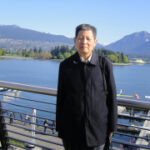
Li Yousheng (Completed in March 2017)
(one)
The back of Li Youzheng’s book “Remembering the Past and Narrating the Reality” states: “Through Li Youzheng’s unique experience, we see a microcosm of the painful struggle of Chinese intellectuals against Western culture in the more than one hundred years since the introduction of Western learning to the East, and at the same time, we also present you with a Li Youzheng who is full of emotion and personality.”[1] What is most commendable is that Li Youzheng was able to have profound attainments in the four fields of hermeneutics, phenomenology, structuralism and semiotics, and then integrate East and West, based on his own newly established Neo-Confucianism to fight against the modern commercialization tendency dominated by Western civilization.
Living in the same era as Li Youzheng, I am deeply moved by this painful struggle, which led me to propose a theory a few years ago of a two-tiered society: the genetically encoded primordial society and the artificial secondary society. The primordial society is driven by emotional aesthetics, while the secondary society is often built upon a set of rational principles. This has led many Chinese intellectuals to resist the Western secondary society, grounded in the ideals of the primordial society of traditional Chinese culture, especially the commercialization of academia. In this light, it is not surprising that I myself have had a similar mental journey; we are both created by the same era and social environment.
Li Rui directly called Li Youzheng’s “Recollections and Facts” “a special academic history”. But Li Rui pointed out:
Why would someone who is already so famous write an autobiographical work? While his childhood and middle school years are certainly full of interesting recollections, is it necessary for some chapters to directly or indirectly criticize He Lin, Li Zehou, Gan Yang, Ni Liangkang, Richard Rorty, Eagles, Chen Yinque, Qian Mu, Fu Sinian, Mou Zongsan, Yu Yingshi, Zhang Guangzhi and others? Why would a Western learning expert advocate Confucius’s “benevolence” and expound on the Analects? Moreover, why would he make such a “very strange” statement that the level of Hong Kong, Taiwan and Chinese Sinology is insignificant and that the new academic studies of the future will originate in the mainland? [2]
We can find the answer, or at least clues, to Li Rui’s question in his book *Recollections and Facts*. Li Youzheng writes in the preface:
I initially approached my interactions with scholars both domestically and internationally with the attitude of “making friends through literature and cultivating virtue through friendship,” but I gradually discovered the pervasive utilitarianism of the academic world, which was quite different from the life philosophy I had developed during my secluded period of study in Fuyou Street. Li Youzheng then wrote:
I have also discovered that it is precisely the anti-utilitarian spirit of benevolence that may become the key to the healthy development of contemporary humanities.
This helps us understand why Li Youzheng disagreed with so many scholars, both Chinese and foreign. In fact, this reflects the passionate and principled nature of Li Youzheng, reminiscent of Confucius’s description of those in power as “mere scoundrels, not worth considering,” and Mencius’s “If not me, then who?”—both embodying the spirit of knowing the impossibility yet still pursuing it. The emergence of new scholarship on the mainland is related to the political climate in China during Li Youzheng’s secluded studies on Fuyou Street. Between 1956 and 1976, mainland China experienced a period of rampant Maoist-style communist utopianism, but this surge of idealism had its social basis and ideological origins. Even after Marx’s homeland abandoned communist experiments, China, North Korea, and Vietnam persisted, partly because Confucianism’s ideal of Great Harmony was a crucial component of East Asian traditional culture.
(two)
Li Youzheng dedicates two chapters to discussing his interactions with Li Zehou and their differing opinions. If Li Zehou is a typical scholar within the system, then Li Youzheng is a typical scholar outside the system. After leaving university, Li Youzheng devoted himself to self-study until nearly twenty years later, when China entered the reform and opening-up period, at which point he joined the Chinese Academy of Social Sciences, during which time he also made several overseas visits. Confucius said that at thirty one should be established, and in modern society, people generally only develop a lifelong independent worldview after the age of thirty: a mature view of life and the world that does not change significantly thereafter. I previously proposed that one establishes a framework of understanding and thinking around the age of eighteen, equivalent to high school and early university, while Confucius’s “establishing oneself at thirty” refers to standing firmly in society, that is, the time when one’s worldview and philosophy of life mature. Li Zehou and Li Youzheng do not differ significantly in their framework of understanding and thinking; their difference lies in their philosophy of life at thirty.
By comparing the life experiences and eras of Li Youzheng and Li Zehou around the age of thirty, we can see how different they were. Li Zehou was born in 1930 and first gained prominence during the great debate on aesthetics in China in the late 1950s and early 1960s. However, this coincided with the Three Years of Natural Disasters. Although Li Zehou was financially secure, the era was one of the most cautious and low-key periods in the newly established People’s Republic of China. Li Zehou’s renowned aesthetic theories stemmed entirely from his adaptation to the demands of the CCP’s Marxist-Leninist beliefs and traditional Chinese thought. Because of this, even after becoming a delegate to the National People’s Congress, Li Zehou rarely spoke out. However, in the 1980s, during the reform and opening-up period, he followed the trend and called for a farewell to revolution. Even then, Li Zehou maintained a tactful and considerate style, keeping his evaluations of Mao Zedong at the level of specific analysis of specific issues, avoiding general assessments to prevent conflicts with others.
Born a few years later, Li Youzheng turned thirty in 1966, precisely during the vibrant and upwardly mobile era of the Cultural Revolution, a time of self-assurance and ambition. Li Youzheng himself described this period: “By the time the National Library of China closed due to the Cultural Revolution, I had already spent seven or eight years there, and had basically formed my own worldview, philosophy of life, and view of knowledge. This was indeed quite helpful for my independent study during the second phase of my life in my homes in the south and north over the next 11 years.” This shows that Li Youzheng’s personal thoughts and life before and after the Cultural Revolution were consistent and stable; the intensity of the Cultural Revolution had no impact on him whatsoever, because he had grown up with this utopian ideal.
When a banner reading “Book Burning Rally” was displayed in Dongdan Square, Beijing in 1966, Li Youzheng wrote the following:
When I saw this scene while riding my bike past Dongdan, I couldn’t help but feel a surge of excitement. “Isn’t this the perfect time for scholars to work hard?”
(three)
I was born a few years later and also experienced this era, sharing a life experience quite similar to Li Youzheng’s. As I understand it, Li Youzheng also possessed an ambition of “if not me, then who?”, only his efforts differed slightly from those of the Red Guards.
Li Youzheng wrote at the beginning of his book: “The development of my thoughts in the first half of my life can be roughly described as: from literature to philosophy, and then from philosophy to (interdisciplinary scientific) theory.” This may be the life trajectory of a considerable number of Chinese intellectuals, and at least I myself have: from a love of literature, to philosophy, and then to interdisciplinary scientific theory.
I was born in 1943 and began my schooling in the spring of 1950. In 1963, I was admitted to Peking Union Medical College, then known as China Medical University. For the first three years, I studied in the Department of Biology at Peking University. Because Nie Yuanzi, a student at Peking University, was personally selected by Mao Zedong as the author of the first Marxist-Leninist big-character poster, Peking University did not experience the student rebellion and division process that other universities went through. Furthermore, Peking Union Medical College, where we transferred in 1967, had only a few hundred students, making it a small place with a high concentration of intellectuals. They probably all shared the mentality and intellectual views of Li Youzheng and his father; they, teachers and students alike, declared rebellion during the Cultural Revolution, and similarly, there was no student division. Li Youzheng described himself and his father thus: “Both of us were at the forefront. Unexpectedly, after the peak of the house raids passed, we, father and son, were both unharmed.” I personally share the same feelings and sentiments: being at the forefront and then unharmed.
After graduating, I worked for eight years in a staff hospital during the Third Front construction in Guizhou, until 1978 when I was admitted to Peking Union Medical College Hospital for graduate studies and later went abroad to pursue my doctoral degree. Now, in my seventies, reflecting on my life, those eight years in Guizhou were the most beautiful and unique period of my life. I arrived there in 1970, beginning a year of labor training while still living like a student. The Lin Biao incident in 1971 practically brought the Cultural Revolution to an end. The local government’s response to the higher authorities’ promotion of the Cultural Revolution was perfunctory. Backed by Mao Zedong’s utopian communist ideology, the Cultural Revolution spread to our staff hospital, which housed about two hundred people including their families. All that remained was equality, friendship, and the warmth and beauty of social life. At our weekly meetings, everyone would share their thoughts and ideas, much like the activities I participated in with Christians after going abroad, thus connecting people on a spiritual level. Later, one of the criticisms of the Cultural Revolution was the rampant anarchism. With no possibility of changes in position or salary, there was no political authority, and the power of hospital leaders vanished. The order of work and life depended on the consensus formed in those meetings, and also on human nature—the sincerity of benevolence emphasized by Confucius and Li Youzheng. It was only in my seventies, recalling this period, that I wrote:
The hospital, housing about two hundred family members, shared a large compound with its staff dormitory, while outside lived farmers in a mountain valley. The farmers dressed in clothing supposedly inherited from the Ming Dynasty; they knew nothing of the Qing Dynasty, let alone the Kuomintang or the Communist Party. Judging from the complete absence of the tradition of foot binding for women, I think it dates back even further: they may have lived like this since the beginning of time, unaware of the changes in the government. In this isolated mountainous area, coupled with the relaxed atmosphere of the later stages of the Cultural Revolution, our hospital exhibited many primitive social customs: if a couple quarreled or a child was beaten at night, it became the talk of the town the next day; work was so casual that many people would go home to tend the stove or go out to buy groceries while on duty. Nearby farmers even ran businesses near the hospital specifically for this purpose.
I turned thirty in 1973, which was also the year I established my lifelong philosophy. Those eight years were the most successful and fulfilling period of my life. Before graduating and starting work, due to the admonitions of my father and brother, who had both been cadres, and the inspiration I gained from my reading, I decided that in my words and actions, I should uphold justice, sympathize with the weak, and carefully avoid saying anything that might offend others; personally, I should act in accordance with the two virtues of honesty and wisdom advocated by Chairman Mao, with wisdom being about thinking and asking questions, guided by the idea in Sun Tzu’s Art of War of establishing an invincible position before achieving victory. In those years, with the communal dining system, there was no prospect of any change in life. My pursuit of victory became a deliberate pursuit of maximum effect, which is what Li Youzheng called seeking truth, reason, and sincerity. I’ve simplified my personal pursuits into four or five goals: 1) Focus on my relationships with others, leaving a good impression on hospital leaders and the public, that is, caring about my social image and relationships with others; 2) Improve my medical professional skills; 3) Develop skills related to my personal interests, such as literature, history, social sciences, and painting (I love art); 4) Benefit my physical and mental health, and so on. I’ve set a rule for myself: if doing something only benefits one of these goals, I will resolutely not do it; if it helps three or more goals simultaneously, I will overcome all obstacles to do it.
My achievements over those eight years were remarkable; I’ll just cite one example. In my final years, I set a goal of reading 10,000 pages of non-professional books annually. I could borrow various books from the nearby Guizhou University, where professors frequently visited our hospital. I also took the initiative to organize political studies for patients, publish wall newspapers, and even served as a militia platoon leader, responsible for the department staff’s gymnastics exercises. At that time, the hospital used a free vote to select outstanding workers each year, and I consistently received the most votes, earning a year of advanced training in Beijing. In 1978, when the first national postgraduate entrance examination was held, only five people from four medium-sized workers’ hospitals passed. I was the only one directly sent abroad for further studies due to my outstanding performance, becoming the first postgraduate student from the Academy of Medical Sciences to board a plane abroad. After that, I left behind the original social warmth and beauty of the Guizhou Workers’ Hospital and began a busy and hectic life, experiencing the full spectrum of human emotions before truly understanding the lost beauty and warmth.
(Four)
Reading Li Youzheng’s “Recollections and Facts” made me realize that I had actually gone through a similar emotional journey as Li Youzheng. I want to clarify here that I have no intention of comparing myself to a celebrity, but rather to show that celebrities, like ordinary people like us, experience the same joys, sorrows, and hardships in life.
My eight years at the Guizhou Workers’ Hospital, or Li Youzheng’s nearly twenty years of self-study, have been comparable experiences, leading to a similar mindset towards the world at the age of thirty.
Lu Xun used the couplet “Fierce-browed, I defy a thousand pointing fingers; Head bowed, I willingly serve the children” to portray himself, which in fact reflected the sentiments of a generation of intellectuals. This led to the unanimous defection of the dozen or so democratic parties to the Communist Party before the outbreak of the war between the Kuomintang and the Communist Party. In mainland China during the 1950s and 60s, most intellectuals were immersed in a utopian joy of a paradise on earth. In this era, the support that Marxism revealed for Western economics in maintaining social order had almost vanished, and a violent, authoritarian system threatening life and death had not yet been widely established; even if it existed to some extent, it was far removed from the social lives of ordinary people. Li Youzheng, having left the mainstream social life of his workplace and school, studied independently in the library and at home, free from worries about food and clothing, living a carefree and unrestrained life. Those around him, deeply influenced by his utopian joy, were happy to help him. We can imagine that Li Youzheng’s social circle during his self-study period might have been similar to my own unique living environment in a workers’ hospital in the mountainous region of Guizhou.
As mentioned above, the social life of my Guizhou Workers’ Hospital is close to the genetically encoded primitive society, reflecting an innate human instinct to incline towards it. Compared to the harsh reality of today’s secondary society, two points need to be emphasized: first, Confucius’s human-heartedness; and second, a sense of responsibility towards all of humanity, which is the slogan popular in the 1950s and 60s: “For the two-thirds of the world’s suffering and oppressed people! Only by liberating all of humanity can we ultimately liberate ourselves.” These two points are precisely what Li Youzheng’s Neo-Renxue (New Benevolence) emphasizes, and why he has tirelessly fought against scholars both in China and abroad.
What we see today, many years later, is that the vast majority of people, both domestically and internationally, do not think this way; they believe that humanity as a whole is not something they need to consider. As for the future of humanity, the Chinese would say: “Humanity will get better!” Westerners, influenced by Christianity, would say: “Humanity will perish sooner or later,” because they haven’t listened to God. As for the benevolence that Confucius spoke of, the normal functioning of a society cannot rely solely on benevolence.
I left the Guizhou Workers’ Hospital in 1978, and in the nearly forty years since then, my experiences have shared similarities with Li Youzheng’s: a broad-mindedness towards all of humanity allowed me to see problems others missed and to achieve many accomplishments and discoveries that others failed to make. If Li Youzheng was a successful person in society, he only appears less successful compared to Li Zehou. As an ordinary person throughout my life, I also seem less successful compared to the ordinary people around me. The conclusion is that simply having a benevolent heart towards humanity and that of Confucius is not enough in today’s society. However, we can also learn from Li Youzheng, grounding ourselves in a benevolent heart towards humanity and that of Confucius, remaining steadfast throughout our lives, and not caring what others say.
I arrived at Cambridge University in England at the end of 1979, where I lived as a student for four years. Like Peking University, where I studied, and the University of Chicago, where I later worked, Cambridge University was a renowned comprehensive university with both arts and sciences programs, which suited my tastes and aligned with the broad-mindedness towards all of humanity that I had cultivated in Guizhou. These were also the four years in which I made the most achievements in the medical field, focusing my research on chromosomal changes in leukemia and making many discoveries that others had never even considered. I also discovered that while those major discoveries that I considered fundamental breakthroughs could be published in papers, they were not widely known. On the contrary, it was those discoveries that further explored directions paved by predecessors that attracted attention.
Leukemia-specific chromosomal alterations were a significant breakthrough in cancer research, leading to the later discovery of oncogenes. These alterations were first discovered by Professor Janet Rawley of the University of Chicago. After graduating from medical school, Rawley spent many years raising her sons at home. Only after they became adults did she seek a spare corner in a university laboratory to pass the time, unexpectedly making a world-shaking discovery. After her findings were published in authoritative journals such as *Science*, numerous medical laboratories worldwide attempted to replicate her experiments. For many years, only Japan and Australia obtained the same results. At the time, the medical community held the view that this was due to the geographical distribution of leukemia. When I visited the UK, several laboratories there also found negative results, including those at Cambridge University where researchers had completed their doctorates three or four years before me. I was the first person in the UK to break this deadlock and replicate Professor Rawley’s discovery. Around the same time, France and Sweden in Europe also replicated Professor Rawley’s findings. Thus, the original theory of geographical distribution became completely untenable; the issue was due to technological limitations and a lack of perspective.
While science is highly logical, experimental design and observation both require human intervention. A person’s knowledge, background, and perspective all contribute to their unique viewpoint; those lacking certain refinements may simply overlook or fail to see what’s happening. Professor Janet Rawley offers a perspective detached from professional concerns, while I draw upon the artistic perspective honed through eight years of humanities reading and painting in Guizhou. I told my colleagues that our work wasn’t pure science, but an art form, a sentiment they shared. Blood samples are sent to medical laboratories worldwide for testing, including in the UK, but my research revealed that normal cells are more likely to die during the mailing process, while leukemia cancer cells are more likely to survive. Furthermore, once placed in an incubator, cells with chromosomal abnormalities quickly enter their division and reproduction cycle. I also discovered that chromosomal number variations in leukemia patients—specifically, the addition or loss of a particular chromosome—differ between male and female patients. The chromosomes involved are similar in size to sex chromosomes, and women are more prone to losing them, while men are more likely to obtain them. This may involve fundamental cellular mechanisms and could lead to significant discoveries, but further research is needed for a full understanding. People without a broad perspective wouldn’t think to observe such irrelevant issues.
After returning to China in 1984, I discovered what is known as monophasic transaminase elevation, meaning hepatitis B patients with persistently elevated transaminase levels but no other symptoms. This was undoubtedly related to my long-term experience handling blood samples in Cambridge, England. Upon arriving in Canada, I learned that 75% of hospital staff were infected with the hepatitis B virus. Because the best treatment for hepatitis B is rest, I didn’t work hard for the next six or seven years. From 1987 to 1990, while at the University of Chicago, I was permitted to work half-days. Thus, during my transit medical examination upon arriving in Canada from the United States in 1990, I received my first normal blood test report, which showed hepatitis B virus antibodies, demonstrating that my body had finally overcome the hepatitis virus. For the next five or six years, I worked twice as hard, achieving remarkable results and publishing six or seven articles. However, this period ended in 1996 when my spouse and I were both facing dismissal, and our bosses lost their jobs.
Working at renowned research institutions in Tianjin and Chicago, I was able to follow the same line of thinking I began at Cambridge, achieving remarkable results despite my liver disease. In Canada, however, I worked in ordinary institutions where the people lacked the perspective to accommodate my unique ideas. I could only conform to their interests and demands, publishing numerous articles, mostly echoing common observations. I took sick leave in 1997, which allowed me to begin my study of Chinese Taoism. This enabled me to synthesize my life’s accumulated knowledge and experiences, proposing a two-tiered social theory: a genetically encoded primordial society and a man-made secondary society. Nearly twenty years later, I have published several books, but so far, it has not received recognition from the academic community. A retired white university professor with a philosophy background read my articles and said: “The issues you’re addressing are too broad.”
Looking back on my life now in my seventies, I think this: My eight years at the Guizhou Workers’ Hospital were comparable to Li Zehou’s, the only difference being that he was a celebrity while I was an ordinary person. He lived in China and internationally, while I lived in a small hospital with only a couple hundred people. My outstanding achievements within my hospital were recognized by the local leaders and staff. Since then, my life has been similar to Li Youzheng’s, again the difference being that he lives in China and internationally, while I have lived in different hospitals and local communities. During this period, I have made achievements and published articles, but I haven’t received the same recognition from hospital leaders and staff as I did in Guizhou.
The three of us share a common point: the worldview formed in China in the 1950s and 60s, the original social complex of traditional Chinese literati, and the convergence of Western communist thought have enabled us to face all of humanity while also taking care of the human-heartedness deep within our hearts—that is, the Chinese perspective of the humanities and social sciences.
(five)
I am a layman when it comes to Li Youzheng’s expertise in hermeneutics, phenomenology, structuralism, and semiotics, as well as Li Zehou’s aesthetics, but I do have some common-sense understanding based on hearsay. In my view, these all represent a return to the deeper consciousness of humanity, a departure from the purely rational reality of a secondary society, emphasizing the irrational aspect of human thought inherent in humankind. Li Zehou became famous in the 1950s and 60s for participating in domestic aesthetic discussions at the time. He set aside the debate on subjectivity versus objectivity within the aesthetics community, transcending the binary opposition of mind and matter—the reflectionist model—and emphasizing social practice, discussing his later so-called philosophy of subjective practice from a social perspective. Li Zehou proposed the proposition that “beauty is the unity of objectivity and sociality.”
The aesthetic debate that lasted five or six years at that time formed four major schools of thought: the objective aesthetics school represented by Cai Yi, the subjective aesthetics school represented by Lü Ying, the unity of subjectivity and objectivity school represented by Zhu Guangqian and others, and finally, Li Zehou’s theory of social practice aesthetics. Of these four, only Li Zehou was under thirty years old when the debate began in 1956. At that time, I was in middle school and frequently heard Mao Zedong’s theories on practice and contradiction. Li Zehou’s aesthetic theory emphasized collective social practice and humanity’s transformation of the natural world—the so-called “humanization of nature”—so he wasn’t talking about individual practice. Li Zehou’s aesthetic views were clearly related to the era in which he grew up, showing a tendency to forcibly incorporate Marxist dialectical materialism into aesthetics, something he, as a young person, couldn’t avoid; humans cannot transcend their time. By the time the debate concluded in 1961, Li Zehou’s views had largely gained official recognition.
Li Zehou later further developed his aesthetic theory into a philosophy of subjective practice, where the subject is the subject of human social practice, with a particular emphasis on the use of tools; hence, it is also called an anthropological ontological philosophy. He believed that the humanization of external nature makes the object a beautiful reality, while the humanization of internal nature enables the subject to experience beauty. This process from the humanization of external nature to the humanization of internal nature is “accumulation.” This is the extreme of the two-tiered social artificial man theory, which thoroughly transforms everything, inside and out, into the accumulation of human history and culture. Li Zehou certainly wouldn’t discuss the painting and aesthetics of animals, much less equate early human society with animal society.
Li Zehou’s theory of “emotional ontology” ultimately returns to traditional Chinese culture. The introduction of “emotional ontology” signifies Li Zehou’s attempt to shift his focus to the individual’s spiritual existence. According to his own explanation, this is because anthropological historical ontology takes human existence as its starting point, thus naming “human practical activities involving the use of tools” as “instrumental ontology.” With the development of social productivity and the improvement of modern living standards, the moment when the spiritual world dominates and guides humanity’s future is approaching. History will move beyond historical materialism, and people will move beyond traditional “Marxism.” Consequently, psychological ontology will replace instrumental ontology as the focus of attention.
Thus, Li Zehou began by criticizing the aesthetic views of the older generation, but ultimately returned to the traditional Chinese culture of that generation. This also brought him together with Li Youzheng, whose Neo-Confucianism emphasized human psychology and traditional Chinese culture.
(six)
As for Li Youzheng’s new philosophy of benevolence, it is based on the *Analects*, *Mencius*, and Wang Yangming’s *Instructions for Practical Living*, the so-called “Three Books of Benevolence.” Li Youzheng emphasizes using benevolence to assist truth, stressing the genuine nature of the original Confucian classics, thus expanding his vision to all of humanity. In the preface to *Recollections and Facts*, Li Youzheng declared: “The philosophy of benevolence will become the compass and engine of humanity’s spiritual endeavors.” In the first chapter of this book, he mentions: “The attitude towards life and the way of seeking knowledge that naturally formed during those 20 years of living in seclusion in the city, looking back now, can be said to have unexpectedly and completely conformed to the worldview and view of knowledge in the *Analects*.”
Li Youzheng himself recently offered the following explanation for his new philosophy of benevolence:
The term “New Benevolence” has two meanings here: in a narrow sense, it refers to the interpretation of traditional Benevolence classics with new knowledge, new learning and new principles (therefore, it is different in nature from the hundreds of new interpretations of the Analects at home and abroad; New Benevolence is a product of the convergence of ancient and modern, Chinese and foreign theories and practices), focusing on the modern interpretation of traditional Benevolence ethics; in a broad sense, it refers to a collective exploration platform for the modernization of several humanities theories under the guidance of the value theory of this “rationalism-worldliness-empiricism” humanistic Benevolence ethics, including: modern historical science; modern humanistic ethical science; modern interpretation of Benevolence classics; and modernization of Chinese studies and scientification of Chinese and Western literature, history and philosophy theories. Since humanities and ethics are closely related, modern Benevolence ethics will inevitably be applied to and reflected in the practice of modern humanities theories. [3]
The aesthetic order of the original society is indescribable in words. If it is to be forcibly expressed in words, in addition to the scientific and rational language given by Li Youzheng above, it also requires descriptions from different perspectives of aesthetic or literary language. Li Youzheng gave various descriptions and explanations of his new Confucianism in “Remembering the Past and Narrating the Reality”, which can be regarded as an example of this kind of aesthetic explanation, and is also the so-called deep Chinese element. [4]
Li Youzheng first pointed out:
The essence of Confucianism is the study of motivation, and I believe that ethical motivation determines the direction of humanities theories not only in China but also worldwide. This study of motivation, translated into traditional language, would be: “The teachings of Confucius and Mencius are nothing more than the study of the mind!” (p. 123)
As for what constitutes the art of psychology, “Recollections and Facts” provides many explanations and elaborations:
1) The true Confucius refers first and foremost to one’s character; character refers to one’s attitude towards others. (p. 122)
2) This is the philosophy of Confucius and Mencius, also known as the philosophy of sincerity. (Page 130)
3) The art of psychology can be summarized as the art of sincerity: an examination of one’s own heart and mind. (p. 240)
4) The study of benevolence is not arithmetic, something that can be mastered simply by learning it. How to embrace benevolence is a matter of intuitive understanding and firm resolve, not a matter of logical proof. The study of the mind is not about how to understand principles, but about how to willingly accept and approach these principles. (p. 241)
5) The philosophy of benevolence requires scholars to reflect deeply on their motives, determine their basic value standards, and then use these standards to evaluate various choices. This is called setting one’s will, which is an inner mechanism for making independent choices. This leads to inner conviction, enabling individuals to become independent and effective ethical value choosers, rather than those who follow the crowd or curry favor. (pp. 241-242)
In his autobiography, Li Youzheng repeatedly emphasizes his Neo-Confucianism, but he clearly states that his Neo-Confucianism is only applicable to the humanities in China and even the world—that is, as a compass and engine for the spiritual endeavors of humanity. He does not intend to use his Neo-Confucianism to guide all aspects of social life.
Unlike Li Youzheng, Li Zehou’s philosophical theories were developed based on the philosophical theories of his predecessors. Although it was a theory combining Chinese and Western elements, he did not intend to use his theories to guide any academic activities. If Li Youzheng had the intention of promoting the Way, Li Zehou did not, although his theory of emotion had a clear direction, predicting and guiding the direction of academic and even global development. In short, Li Youzheng and Li Zehou had comparable directions in their academic evolution throughout their lives: they both started with Western-style pure academic research, Li Zehou with Marxist aesthetics, and Li Youzheng with semiotics; both merged Chinese and Western ideas, and finally returned to traditional Chinese culture, emphasizing deep-seated emotions and benevolence, and facing all of humanity, returning to the mindset of young people in the 1950s and 60s who aspired to liberate all of humanity.
I believe I myself have gone through a roughly similar intellectual journey, proposing the theory of a two-tiered society, arguing that Confucius, Mencius, and Daoism, like others, idealized a primitive society encoded in their genetic code. Here, I will use this theory of a two-tiered society to discuss the thoughts of Li Zehou and Li Youzheng. Marxism, based on European society and grounded in social material production, proposed the path of scientific socialism. When introduced to China, it incorporated the primitive social complexes of Daoism and Confucius and Mencius. This primitive society is built upon emotional aesthetics; in the modern two-tiered society, various artistic activities, including literature, are closer to the leisurely, amateurish mentality of the primitive society. In this light, it is not surprising that Chinese intellectuals, immersed in utopian joy in the 1950s and 60s, began a major aesthetic debate.
Li Zehou’s concepts of natural humanization and the natural humanization of man itself are both interpretations following Marxist thought, which best illustrate the artificial human being in a two-tiered society. Finally, does Li Zehou’s concept of emotion refer to the artificially created human emotion of natural humanization, or the human emotion of a naturally occurring human being? From the perspective of the two-tiered society theory, it is almost impossible to construct a two-tiered society using the emotional aesthetics of a primitive society; the prerequisite for the normal operation of a two-tiered society is the absence of emotional impulses.
From the perspective of two-tiered society theory, Li Youzheng’s Neo-Confucianism also faces the same problem. Modern humanities are undoubtedly part of modern two-tiered society. Guiding a two-tiered society with Confucian and Mencian Confucianism faces the problem of the unmanageability of the two-tiered society and requires the assistance of external forces such as law and God. The same applies to the humanities in the world today, because it is also a two-tiered society composed of millions of people, requiring the social rules of a two-tiered society, rather than simply being sincere.
Conclusion: Human civilization, spanning five to six thousand years, faces the unmanipulable nature of a two-tiered society. Under the pressure of self-destruction and escalating warfare, civilization and technology have developed rapidly, also creating the utilitarian, short-sighted individualism of modern Western society. The driving force behind this is God, or perhaps the arrangement of human biology, not humanity itself. In a global village where wealth and knowledge double every ten or twenty years, people are turning to traditional Chinese culture, leading to Li Zehou’s emotional ontology, Li Youzheng’s Neo-Renxue (New Benevolence), and the conclusion that humanity must return to a primordial society.
literature
[1] Li Youzheng (2009): Recalling the Past. Chongqing University Press.
[2] Li Rui (2009): A Special History of Scholarship—Reading Li Youzheng’s “Recollections and Facts”. (Xue Deng, Issue 11; http://www.confucius2000.com/admin/list.asp?id=4072)
[3] Li Youzheng (2014): New Benevolence Studies in Mainland China: Blueprint and Outlook. (http://www.confucius2000.com/admin/list.asp?id=6006)
[4] Li Youzheng (2014): The academic practice of combining Chinese semiotics with deep “Chinese elements”:
The 2014 Summer Symposium of the Forum and its Significance (see Li Youzheng’s website)
author By Dr. You-Sheng Li
Share