Li Yousheng (March 2017)
I received a copy of “Recollections and Facts” from Li Youzheng (1936-) in 2012. After reading it, I was deeply impressed by his unique life experiences, his objective and realistic spirit that blended Chinese and Western perspectives, and the profound insight of a scholar in his later years. I initially planned to write a review, but due to my advanced age and long-term use of sleeping pills, I was often unable to do so. Several years later, I picked it up again.
I was born in 1943, more than six years younger than Li Youzheng; we are from the same generation. I have experienced many of his life stories. He came from a family of highly educated intellectuals in major cities like Beijing, and his father was a prominent democrat. I, on the other hand, came from a rural family and entered university through competitions like the college entrance examination. Despite these differences, our attitudes towards life and our thoughts bear the same imprint of our era, and our differences also testify to the influence of different social environments. Mao Zedong’s era in China was one of the few periods in the world where politics powerfully and directly influenced the social lives of ordinary people.
Comparing our experiences and thoughts confirms the concept of a person in a secondary society. We, the countless individuals in modern secondary societies, are all products of our own making, shaped by the accumulated cultural knowledge of millions of people, and by the choices we make in our surroundings. This guiding ideology of individual free choice stems from the influence of social culture.
1) A difference of six years, a world of difference:
I am less than seven years younger than Li Youzheng and come from an ordinary family, so I never had the opportunity to read many Western classics during Li Youzheng’s primary and secondary school years.
The only full-length novel I read during my primary school years was Zhang Lei’s *The Changing Times*. My family had a collection of Lu Xun’s works bought by my father, and I read many of the stories, including *The True Story of Ah Q*. I entered middle school in 1957, during the Anti-Rightist Movement, and several of our teachers were labeled as rightists. It became almost impossible for us to access Western classic novels like Li Youzheng did. During this period, I read *Tracks in the Snowy Forest*, *Bitter Herbs*, *The History of Entrepreneurship* (by Liu Qing), and Sun Li’s *The Beginning of the Storm*, and of course, *How the Steel Was Tempered*. These works were all recommended by the times. Li Youzheng’s reading of Western classics was also a recommendation of the times, only from the perspective of Chinese society a few years earlier.
I read “Romance of the Three Kingdoms” when I was in the first or second year of junior high school.
As someone from an ordinary family who works in a hospital, I only had the opportunity to access Mr. Li Youzheng’s reading list from his primary and secondary school days in my later years after going abroad.
The conclusion is: if the Anti-Rightist Movement in China had occurred a few years later, I might have, like Li Youzheng, become fascinated with Western classical literature during my middle school years. This kind of reading would have broadened my horizons, built a different sense of self within me, allowed me to experience life with a different mindset, resulting in a completely different emotional journey, and potentially leading me down a different path in life. Without the impact of the Anti-Rightist Movement on academia, I might have been admitted to a liberal arts university.
2) Economic shackles:
After reading about Li Youzheng’s life, I feel that Li Youzheng was a rare person who broke through the shackles of worldly conventions from childhood, and pursued his ideals only throughout his life: knowledge and truth.
I am an ordinary person, like hundreds of millions of ordinary people. My first priority is to make a living. Compared with Li Youzheng, I am someone who is trapped by economic constraints.
Li Youzheng said, “Back then, I used up my 30 jin of grain coupons in less than ten days. For the rest of the days, I had to conserve my energy by selling things and staying in bed for long periods.” (p. 191, Reminiscences, Chongqing University Press, 2009. The same applies below.)
In my entire life, I have never met anyone who defied food rationing like Li Youzheng. I was someone who honestly ate my own rationed food. Only after I passed the postgraduate entrance exam in 1978 did a colleague tell me that other people from the same hospital who also passed the exam bought expensive luncheon meat to stay up all night preparing for the test. They were just supplementing their rations slightly. This also shows that people like Li Youzheng, who secluded themselves to study for nearly twenty years, had many other extraordinary experiences.
Actually, I voluntarily ate rationed meals at the boarding school in 1957. Back then, all the rural students were like me, diligent and frugal, and no one dared to eat to their heart’s content. Only one classmate, the son of the county party secretary, occasionally bought a little extra food, which became the subject of gossip throughout the school.
My middle school fees were less than four or five yuan per month. On Saturdays, I would walk thirty li (approximately 15 kilometers) home, and my parents would prepare farm work and household chores for me as soon as I arrived. On Sundays, I usually went to the fields to do farm work. In my memory, the time after elementary school, going with my classmates to the agricultural cooperative’s fields to weed and earn work points was one of the happiest times of my life. During busy farming seasons, school would let out early, and we could work from three or four in the afternoon until eight or nine o’clock.
I was admitted to China Medical University, affiliated with Peking Union Medical College Hospital, entirely because the school disregarded my father’s wishes and applied on my behalf. My father worried that he wouldn’t be able to afford to send his son to university. In 1963, the year I began university, the worst flood in history occurred. The villagers were surrounded by raging mud and water. The people who delivered my acceptance letter all said to me, “You might be the only one out of three thousand people in our village to survive.” Under these circumstances, my father didn’t stop me from going to school. After seven days of wading through the mud and water, I arrived in Beijing only to find that I could live on the monthly stipend of 18.5 yuan. My father then agreed to let me continue my studies.
During my seven years of university, I often ate only noodles instead of vegetables to save money. After the Xingtai earthquake in 1966, I even sent five yuan home, writing in the letter: “This is money I saved from my student aid through frugality.” When I graduated from university and was assigned to work in Guizhou, my father walked several miles to see me off, saying: “From now on, this family will depend on you.” The first thing I did after reporting for work was to send money home.
My father was a rural doctor, but after agricultural collectivization in 1956, doctors were also collectivized. Even so, my father’s income was above average for a farmer in the countryside. Therefore, university students from rural backgrounds are like me, without the affluence and freedom that Li Youzheng enjoyed.
Li Youzheng wrote: “My monthly allowance from my family was 20 yuan during my middle school years, 25 yuan during college, and back to 20 yuan at home.” (p. 45) Although this fixed income was more than my consumption standard, it was still quite frugal by today’s standards. This was due to the unique social and cultural environment of China at that time, which advocated egalitarianism; such a thing did not exist in the United States.
3) Good grades are the only way out for young people in rural areas:
Li Youzheng said that he was out of sync with school life. He described himself as follows: “From childhood to adulthood, I have always been at odds with school. I don’t know why I should come to school to study, nor do I know what formal education is all about.” (p. 188)
At that time, all teenagers had to go to school, and only after graduating could they find a job. Therefore, the vast majority of young people regarded their school years as their only way out. In China at that time, with its household registration system that separated urban and rural areas, getting into university became the only way for young people from rural areas to leave the countryside.
Due to the founding of the People’s Republic of China and the power transition between the Kuomintang and the Communist Party, Li Youzheng’s primary school years took him to various cities including Lanzhou, Nanjing, Shanghai, Hangzhou, and Tianjin. I, on the other hand, experienced the transition from traditional Chinese family-run primary schools to new-style public primary schools run by the Communist Party. I attended five different primary schools in different locations and for a total of seven and a half years, exceeding the allotted time by a year and a half. Perhaps due to these different reasons within the same political context, both Li Youzheng and I started middle school around the age of fourteen, while most of my university classmates were two or three years younger than me.
Li Youzheng said his grades in school were never very good, always around 70 or 80 points. And for Li Youzheng, living in the countryside, the only option was to go back home and become a farmer. “From first grade onwards, I was always one of the top students in my class,” he said.
Born less than seven years after Li Youzheng, I became one of those of school age at the founding of the People’s Republic of China. Because the Communist Party advocated that all children should attend school, and because China subsequently entered a period of peace, I was fortunate enough to be among the first large group of students in the new China. To cope with this reality, my county established its first-ever high school in 1958, and university graduates from Tianjin were assigned to teach high school students in my county for the first time. Prior to this, no one in such a rural county had ever attended university.
During the three years of hardship following the Great Leap Forward in 1958, Liu Shaoqi and Deng Xiaoping presided over the central government’s work, and China entered a period of pragmatism and low-key action, a departure from the high-profile Anti-Rightist Campaign and the Great Leap Forward. In this political atmosphere, insightful leaders in county towns began to realize that their children had the opportunity to directly enter higher education institutions—the only chance for rural children to leave the countryside and enter the city. They began to consider sending their children to universities, even prestigious ones, as their ambition and a source of immense honor. For them, this was a first.
In this atmosphere, two or three students from the first graduating class of county high schools in 1961 were admitted to universities, and more were admitted in 1962, with some even going to universities in Tianjin. I was in the third graduating class of high school in my county. The school repeatedly emphasized that good students should apply to prestigious universities like Tsinghua and Peking University to bring honor to the school. They were told that even if they didn’t attend school after being admitted, they had to take the exam. As a result, nearly twenty students in my class were admitted to universities, and for the first time in history, six of them went to university in Beijing. They were all children of ordinary rural farmers. If I had been born a year or two earlier or later, I might not have had this opportunity, and my younger brother, who was also an excellent student, would have become one of the “Old Three Classes” sent to the countryside.
Li Youzheng and I both studied Russian in middle school. This was a product of the friendly relations between China and the Soviet Union, as well as a result of the political situation.
During my middle school years, I excelled in many subjects, but my highest score was in Russian. In every quiz, midterm, and final exam, my Russian score was around 98. Because it was rare to get a perfect score without misspelling even one or two letters, the chances of getting 100 were slim, but even rarer was scoring below 95.
Li Youzheng described his school’s foreign language courses as follows: “When I was in fourth grade in Nanjing, I studied English for about a year, but I gained nothing. I only remembered a few words like ‘book’ and ‘boy.’ Although I studied Russian for eight years from middle school to university, I gained almost nothing as well (which shows that I was a very lazy person and willing to fall behind).” (p. 102)
My foreign language outcomes with Li Youzheng were drastically different, forming a stark contrast: because the Peking Union Medical College Hospital required all its students to switch to English, I never encountered Russian again, not even once. English was used solely for daily life, conversation, and writing; I never engaged in any professional language activities, such as translation. Li Youzheng, on the other hand, went on to learn five foreign languages, introducing the latest developments in Western philosophy, which were urgently needed in China at the time, through translation.
4) The difference between going against the tide and learning to swim with the tide:
When a banner reading “Book Burning Rally” was displayed in Dongdan Square, Beijing in 1966, Li Youzheng wrote the following:
When I saw this scene while riding my bike past Dongdan, I couldn’t help but feel a surge of excitement. “Isn’t this the perfect time for scholars to work hard?”
However, Li Youzheng did not attend the book-burning rally to give a speech urging people to read. Instead, he silently regarded the book-burning movement as a great opportunity for himself to study diligently. The reason was simple: after the burning of books, they became rare treasures, just as grain prices rise after droughts and floods.
Marxist class theory is the result of scientific logical analysis, originating from social rationality in modern Europe. However, the Cultural Revolution led by Mao Zedong emotionalized Marxist class theory, leading to the book-burning movement that claimed “the more knowledge one has, the more reactionary one is.” While primary and secondary school students during the Cultural Revolution may have had the urge to burn books, I, as a university student at the beginning of the Cultural Revolution, never witnessed anyone burning books, nor did I burn any myself; I merely collected books that were deemed inappropriate for the times.
In 1966, I was studying in the Biology Department of Peking University. At the start of the Cultural Revolution, I was participating in the Four Cleanups Movement in the suburbs of Beijing. My classmates and I saw the Four Cleanups Movement and the Cultural Revolution as opportunities to experience life and broaden our horizons, so we paid close attention to the development of events and the performances of various figures. We also read various Cultural Revolution-era publications. During the Cultural Revolution, I carefully read through all four volumes of Mao Zedong’s Selected Works twice, word by word.
I returned to my alma mater for a year of further studies in 1973, which began as a so-called “retraining.” In 1978, I passed the entrance exam for graduate school at my alma mater, enabling me to study abroad. During these two reunions with many classmates, I learned a well-known fact: the students who were in their third year of university in 1966 were the most active and engaged in the Cultural Revolution, and the majority of those who “retrained” in 1973 and entered graduate school in 1978 were also from this year. I was a student in that year. We benefited from the trials and tribulations of the Cultural Revolution and broadened our horizons.
If Li Youzheng’s determination to study diligently after the book-burning movement was going against the tide, then the experiences and worldly wisdom of us ordinary people are like learning to swim with the tide. Here, I can conveniently insert what my world-renowned professor, my supervisor, told me when I began my doctoral studies at Cambridge University in early 1980: “Supervising graduate students is like throwing you into the swimming pool of Cambridge University. Three or four years later, I’ll come back to see if you’ve drowned or survived.” Perhaps because I learned to swim with the tide during the ten years of the Cultural Revolution, I didn’t drown in the alluring academic discourse of Cambridge University.
5) The first group of people to emerge from the threshold of reform and opening up:
After Mao Zedong’s death, the political transition proceeded smoothly. The 600 million people went from chanting “Long live the Cultural Revolution” to cheering the downfall of the Gang of Four, without a single instance of violence. Having weathered the storms and gained experience, these 600 million people reached a consensus: everything was in ruins, and it was time to restore the economy, science, and education to normal operation.
Li Youzheng, who had been studying Western philosophy for nearly twenty years, was translating Blokman’s *Structuralism* at the time. In 1977, he was recommended to Mr. Du Renzhi of the Chinese Academy of Social Sciences, who was actively recruiting talent in this field. Mr. Du immediately arranged for Li to work at the Institute of Philosophy and recommended his translation of *Structuralism* to the Commercial Press for publication. Thus, Li ended his nearly twenty-year period of seclusion and self-study and began his regular academic activities. If Du Renzhi had relied on his connections in Beijing to find “hidden talents,” universities and research institutions across the country would have felt a shortage of personnel when they began to operate normally. Around 1977, the nation began planning to recruit graduate students. My colleagues at the hospital urged me to apply: “Even in universities and medical schools, there aren’t many people like you who persist in studying. If you don’t apply, who will?”
In 1979, I was the first graduate student from the Chinese Academy of Medical Sciences to board a plane to the UK to pursue my degree, along with twelve others. Perhaps because it was our first time, the plane malfunctioned mid-flight; one engine started smoking and burned, forcing us to spend the night in Tehran, Iran.
In this light, even as one of the first people to emerge from the doorway of reform and opening up, Li Youzheng had access to upper-class social connections, through his translation work and introductions, while I could only rely on struggling to stand out among numerous candidates. And the elderly Mr. Du Renzhi, who brought Li Youzheng to work at the Institute of Philosophy of the Chinese Academy of Social Sciences, turned out to be a student of Li Youzheng’s father when he was the president of Beijing Normal University.
6) The differences in the passing of the baton between father and son:
Like father, like son, Li Youzheng inherited his father’s career, while I followed in my father’s footsteps. However, there are clear differences between the two. Li Youzheng and his son had a broader perspective on secondary society, focusing on the macro-level situation and development of secondary society. Both of them clearly recognized the social value of academic research such as Western philosophy.
My father’s decision to abandon his studies and join the army in 1937 was an instinctive reaction for many young students when the country was in trouble. When the country entered a period of peace, my father turned to becoming a doctor to save lives, which was also a common reaction to the lack of medical care and medicine in rural areas.
Li Youzheng’s name clearly indicates that he was a younger generation of his father, Li Zheng. Before the War of Resistance Against Japan, Li Zheng was the president of Beiping Normal University. For Li Zheng, one of the few prominent intellectuals in China, the more than twenty years from 1937 to 1949 were an abnormal period of war. He and his university could only flee to remote areas of western China to survive and wait for the war to end. After 1949, because the left-leaning politics of the Communist Party were incompatible with Li Zheng’s academic pursuits, he adopted a policy of seclusion to await the end of this era. The end of this era was marked by the death of Mao Zedong. Li Zheng died before Mao Zedong, and his son, Li Youzheng, was able to inherit his father’s aspirations and make a name for himself in academic circles both at home and abroad.
Although I also followed in my father’s footsteps and worked in the hospital for many years, I didn’t have the same clear-cut goals and deliberate pursuit as Li Youzheng. My admission to the hospital in 1963 and 1978 was largely due to chance at the personal and family level, and more so to the social situation. My reason for following in my father’s footsteps and working in the hospital was because healing and saving lives is an instinctive calling of ordinary people, and medicine is just one of the ordinary professions in life. The scholarship and truth pursued by Li Youzheng and his son are beyond the reach of millions of ordinary people like us.
Conclusion: Young people’s fondness for literature, especially realist literature, is a normal part of life and a reflection of their purity, less susceptible to the corruption of secondary social civilization. Li Youzheng’s literary interests were preserved for a long time, further developing into philosophy and reflections on society and life, ultimately leading to the Neo-Confucianism he championed throughout his life. I also enjoyed realist literature in my youth, then dedicated my life to medicine, and after retirement turned to philosophy and reflections on society and life, proposing a two-tiered social theory and asserting that humanity should return to its original social trajectory. Thus, while both individuals started from similar points and reached similar conclusions in their later years, they followed drastically different life paths, confirming the viewpoint of “human beings are all shapes of their respective socio-cultural environments.”
Finally, let me mention an interesting contrast: Li Youzheng loved literature during his middle school years, yet he disliked writing altogether. His love of literature from the beginning had an academic element, a pursuit of the social commentary behind literary works. This was common knowledge in a highly educated family like Li Youzheng’s. From elementary school onwards, I showed talent in painting and writing. During my primary and secondary school years, my paintings and essays were frequently exhibited and read to the whole class by my teachers. For me, this was a natural expression of innate talent, without a trace of personal effort or pursuit, and aside from heredity, there was no influence from my family. My love for literature was the same. Only in this way could I study medicine and forget my literary and artistic talents for life.
When I was in the second year of middle school, one of my short stories was published in the Shanghai-based magazine “Juvenile Literature.” In high school, another short story of mine was included in “Selected Essays by Middle School Students” published in Cangzhou. To my knowledge, no one else in my county’s middle school had achieved such success. In my lifetime, these two works were merely fleeting moments, and I only felt a touch of self-pity in my later years.
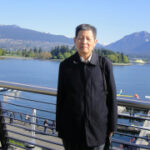
author By Dr. You-Sheng Li
Share