Confucius, Mencius, Laozi, Zhuangzi, and Postmodernism:
Taoist Philosophy for the 21st Century
Li Yousheng ( Autumn 2021 )
Abstract: Apart from Chinese civilization, the other five original civilizations in the world all originated in narrow strips of land not far from oceans and deserts. Geographical constraints propelled humanity through a five-thousand-year history of escalating class struggle and warfare. Under the pressure of survival in the face of war, humanity began to abandon its inherent humanity, moving towards artificial secondary societies and the path of artificial beings. Chinese civilization began in an open area, yet was geographically separated from other Eurasian civilizations, until the Spring and Autumn and Warring States periods when its philosophical foundation was laid. Both Confucianism and Taoism idealized a natural, primordial society, adhering to the values of the natural, genuine person. When the era of war-driven civilization came to an end, the contemporary relevance of Confucian and Taoist philosophies became apparent.
* * * (Read the full article)
Recent studies by scholars have found that the five thousand years of human civilization is a history of continuous escalation of war: Eckhard recently proposed the dialectical evolution theory to explain the evolution of human civilization. He used the frequency of battles as a measure of war, the area of empires as a measure of empires, and the number of famous people who entered encyclopedias and textbooks as a measure of civilization. Eckhard called these famous people geniuses, that is, the number of geniuses constitutes the measure of civilization. Eckhard’s research results found that the entire human world is a spiral of continuous ascent in the five thousand years of civilization, only ascending and not descending. As far as a region is concerned, there is also ascent and descent in the five thousand years. When expenditure exceeds income, this spiral movement is reversed, and civilization declines, which is manifested as decentralization, feudalization, and invasion by foreign races. Eckhard found that in the process of spiral ascent of all civilizations, not only civilization, empire and war rise at the same time, but also lead to the expansion of social inequality, which is manifested as: slavery, caste system, class differentiation and social hierarchy, etc. [1]
This doctrine can be verified by the words of the ancient Greek scholar Heraclitus (c. 540-470 BC), who said, “War is the father of all things, war is the king of all things. War makes some gods, some men; some slaves, some free men.”
Eckhard described his theory as follows: “Dialectical evolution seeks the interrelationship between civilization, empire, and war, such that the interaction between the three leads to positive feedback, causing them to form a spiral motion that is constantly rising and moving forward. Unless negative feedback is established, causing the three to spiral in the opposite direction.”
Eckhard’s discovery actually aligns with the Marxist theory of class struggle. The first chapter of *The Communist Manifesto* states explicitly, “The history of all societies up to this point has been the history of class struggles.” Domestically, it is class struggle; between different countries, it is war. In 1938, Mao Zedong read Clausewitz’s *On War*, in which Clausewitz argued that war is a continuation and development of politics. In his book *On Protracted War*, written that same year, Mao Zedong elaborated on Clausewitz’s views, explicitly stating the widely circulated assertion: “Politics is war without bloodshed; war is politics with bloodshed.”
Marx and Engels believed that class struggle was the direct driving force of historical progress. They further pointed out that “all written history is the history of class struggles, that is, the struggle between the exploited and the exploiting, between the ruled and the ruling, at various stages of social development; and this struggle has now reached the stage whereby the exploited and oppressed class (the proletariat) can no longer liberate itself from the class (the bourgeoisie) that exploits and oppresses it, without simultaneously freeing society as a whole forever from exploitation, oppression and class struggle.”
This leads to the Marxist ideal of a communist society aligning with that of Confucius, Mencius, Laozi, and Zhuangzi from two thousand years ago in China: Laozi and Zhuangzi advocated a return to nature and championed a primitive, natural life in small, sparsely populated countries; Confucius and Mencius promoted benevolence and righteousness, harboring a compassionate heart that sought to unify the world through benevolence and righteousness. In short, Confucius, Mencius, Laozi, and Zhuangzi from over two thousand years ago, like Marx and Engels, sought to “free the whole society forever from exploitation, oppression, and class struggle.”
Mencius’s doctrine of unifying the world through benevolence and righteousness was an opposition to war, and Lao Tzu also explicitly opposed it. Lao Tzu said, “Weapons are inauspicious instruments, not the instruments of a gentleman. They are used only as a last resort, and tranquility is paramount. Victory is not beautiful; those who praise it delight in killing. Those who delight in killing will not gain the support of the world.” “When many are killed, mourn and weep for them; treat victory as a funeral” (Tao Te Ching, Chapter 31). Lao Tzu here views victory in war as a bad thing because both sides have lost people, requiring funeral rites. No country in later civilizations has ever treated victory in war with funeral rites. If a country insists on doing so, its army will lose direction, the people will oppose it, and it will only collapse amidst widespread opposition. Lao Tzu’s guiding principles on war are only applicable to prehistoric primitive societies and the future communist society predicted by Marx.
Since the two World Wars, although a third world war has not occurred, local wars have never ceased. The two uses of nuclear weapons at the end of World War II shocked the entire world, marking the first time humanity possessed such destructive power. Today, even children know what nuclear bombs and missiles are, because more and more countries in our world possess increasingly larger numbers of nuclear weapons.
The book “A Global History” by American scholar L.S. Stavrianos has been highly praised since its publication in 1970 and has been translated into many languages and is popular around the world. The book begins by saying: “In September 1985, the Council of the International Scientific Union, composed of scientists from 30 countries, reported that the shock waves and radiation effects of a nuclear attack would directly kill hundreds of millions of people, but of the world’s five billion people, one billion to four billion would die of famine. This famine is caused by nuclear winter; in nuclear winter, the huge cloud formed by the black mushroom cloud produced by the nuclear explosion will cover the earth, preventing crops around the world from receiving heat and sunlight.” Humanity has mastered the ability to wage war that will destroy all of humanity. [2]
In short, we humans have lived under the shadow of escalating war since birth, and are far from escaping the five-thousand-year history of escalating warfare.
In my self-published English book “A New Interpretation of Chinese Taoism” in 2005, I first proposed the concept of a two-tiered society, dividing all human societies into the genetically encoded original society and the artificial secondary society. Unlike all other civilizations in the world, Chinese civilization began as a superpower in the original society, maintaining peaceful coexistence among various local powers, much like the United Nations today. It was not until the Warring States period that it entered the secondary society. Laozi and Confucius lived in the late Spring and Autumn period. At that time, the Five Hegemons and the Zhou Dynasty together exercised the functions of a superpower, and were still able to maintain a relatively peaceful coexistence within the country. Laozi and Confucius could only use the original society in front of them as the basis for their social thinking. Their ideas were inherited by Zhuangzi and Mencius. Faced with the bloodshed of the secondary society in the Warring States period, Zhuangzi and Mencius upheld the lifestyle and culture of the original society and refused to compromise with the secondary society in front of them. [3, 4]
Eckhard’s theory of escalating wars across five thousand years of civilization and Marxist class struggle are both used to describe the artificial secondary societies of civilized humanity. The people in these secondary societies are also artificial; contemporary sociologists and anthropologists recognize the high degree of malleability of human nature, stating that human nature is merely a blank slate to be painted on, and that we are, in short, what we make ourselves (see 4: p. 38).
Xunzi made a similar argument two thousand years ago, saying, “That which cannot be learned or accomplished, yet exists within people, is called nature. The nature of people today is that they can see with their eyes and hear with their ears.” Therefore, Xunzi refers to the ability to see and hear as human nature, essentially a blank slate. Xunzi also said, “That which can be learned and accomplished, yet exists within people, is called artifice.” (Xunzi, “On the Evil Nature of Man”) Here, Xunzi is referring to this artificially created human being in a two-tiered society, but he calls it “artificial,” implying forgery, because Zhuangzi had already proposed the concept of a true person returning to nature. Here, I combine Xunzi’s concept of artifice with the concept of artificial humans in modern Western anthropology, referring to humans in a two-tiered artificial society as artificial beings created through cultural traditions passed down through generations: artificially created humans.
From the primitive societies where humans lived naturally for millions of years, human language developed to a stage where humans could use their vocabulary to describe a virtual scenario—a linguistic expression of life experiences and action plans. At this point, humans first discussed their experiences and future plans with each other; that is, the ability to organize personal imagination and thought using language—this is the emergence of subjective consciousness. The author estimates this period to be between 50,000 and 80,000 years ago. During this time, humans began funeral rites, demonstrating their ability to speculate about the afterlife. Theoretically, subjective consciousness is a cultural construct based on language. This artificial subjective consciousness, like computer software, is immortal, while the hardware—the computer and the human body—has a lifespan and dies.
If animals also have the ability to make new tools, then humans, after developing subjective consciousness, are different from animals. They can not only make tools, but also have the ability to build a new life for themselves. The creation of this new life is agriculture and animal husbandry on desert grasslands in the history of human civilization. If the animal husbandry of nomadic peoples still needs to migrate constantly, then farmers who operate agriculture can settle down for a long time. However, in the early stages of agriculture, farmers need to constantly renew the land, that is, abandon the land that has become barren after years of cultivation. At this time, society is not a man-made secondary society. L.S. Stavrianos wrote in his “Global History”: “Usually, the basic social unit that constitutes a Neolithic village is a large family consisting of several couples and their children. … The output of products is only enough to meet the limited traditional needs of each family. There is no motivation to produce surplus products. That is to say, labor is just an episode in life, with diverse content and a relatively limited time. … For him, work is not an unfortunate thing that must be endured for the sake of making a living. On the contrary, it is an accompaniment to kinship and village community relations.” [2] This is exactly the original meaning of the aesthetics of the original social life: life itself is beauty, and it is also part of the beauty of the material cycle of the earth’s nature, just like the fragrance of flowers and the songs of birds. If secondary societies are built by humans through language and rational thought, then primordial societies are those inherited from our ape ancestors and were not expressed in language.
Because Confucianism and Taoism, the mainstream cultures of Chinese civilization, both idealize a primitive society, rural China in the 1950s was still in a quasi-primitive state, as was the case in my hometown on the central plains of Hebei. In my later years, far removed from the hustle and bustle of secular society, I recalled my childhood and realized the beauty of that tranquil, natural life. Local farmers say that once you leave the village and stand in the fields, all you see is blue sky, white clouds, and endless green farmland; the village is obscured by the surrounding trees. Even within the villages, most farmers’ houses are earthen houses the same color as the earth; a few brick houses are simply covered with a layer of bluish-gray bricks on the outside. Throughout my life, traveling far and wide, I have never seen blue bricks; they are all red. And in my childhood, I never saw a single red brick or tile; the local farmers considered red bricks taboo. After firing the bricks in the kiln, they would pour water into the kiln to turn the red bricks bluish-gray, then strictly inspect them, destroying any bricks with even the slightest trace of red.
In my later years, I learned that blue and green are colors that bring peace, and they were also the colors of nature in the lives of prehistoric humans. In Canada, a country with only thirty million people, I once practiced Taoist cultivation, seeking a relatively open place free from any man-made structures. After months of arduous searching, I finally found a single patch of riverbank grassland surrounded by a river and forest. After practicing there several times, I noticed a black power line running through the trees at the far edge. My search for a purely natural environment ultimately ended in failure.
Like the Neolithic villages described by L.S. Stavrianos, the farmers in my hometown at that time did not distinguish between work and entertainment; they clearly regarded work as a form of entertainment. Since cultivating crops to feed their families did not require much time, they engaged in fishing and hunting with meager returns, and even raised eagles to catch rabbits, with dozens of people following along to watch the spectacle.
Let’s go back to the present and see how people live in the United States, the leading capitalist society. Some people have conducted a detailed comparative study of modern Western democratic developed countries and found that the United States has the highest per capita GDP, but at the same time, the gap between the rich and the poor is the largest, and Americans also show unusual religious enthusiasm. In recent years, a growing movement in the United States has sought to teach the creation myth of God and Darwin’s theory of evolution to primary and secondary school students on an equal footing. The author of the article concluded that the high efficiency of the United States comes from the pressure caused by the gap between the rich and the poor, and people are therefore in great pain and need the anesthetic effect of religion. [5]
In 1983, as I was finishing my doctoral studies at Cambridge University in England, I traveled to Toronto, Canada, for an international academic conference. It was then my first visit to New York City. As I was about to descend the subway stairs, I was stopped by white people around me: “Are you crazy?!” They told me that people could only wait at the station entrance and rush in together when they heard the train arrive; otherwise, one person alone in the empty station would be murdered by bad people. The trains and buses there were smeared and vandalized, their doors and windows broken and dilapidated. In the early years of the 21st century, I read reports in local newspapers showing that the number of murders annually in the Washington, D.C. area was forty-six times that of the Toronto area.
The homicide rate in contemporary Canada is far higher than in contemporary China. In contrast, the violent crime rate and the incidence of mental illness in the Hebei Plain where I lived in the 1950s were lower than in urban areas of China. During my more than ten years of life there, I never heard of any violent crimes or mental illnesses in my village or surrounding areas. All those arrested and imprisoned were for political reasons.
The author says, “This practice of confining the countryside to family communities made rural life relatively stable. Except during times of war, drought, or flood, life was generally as Lao Tzu described: ‘They enjoy their food, their clothes, their dwellings, and their customs,’ living a simple and joyful life. They had a lot of leisure time, especially in winter when they had nothing to do. They also used their leisure time for spiritual life, including religious pursuits such as praying to gods and Buddhas. The number of festivals they had each year, the grandeur of their weddings and funerals, and the frequency and scale of their various recreational activities often led to the entire population working together instead of farming. Such things would make today’s urban office workers envious. Compared with modern life, their life was closer to the primitive social life of prehistoric times. Their weakness was that anarchy was powerless against secondary socio-political forces. Their life could be swept away by chaotic troops overnight, leaving no trace in history.” [6, p. 300] I later wrote a novel using my hometown’s rural life as a model, saying that this Taoist utopia was completely submerged by a cup of McDonald’s coffee in a capitalist economy.
There is a lack of research on the comfort of peasant life in Chinese history. The image of poverty and ignorance is often portrayed only by intellectuals in secondary societies, and modern revolutionary theories, emphasizing the cruelty of landlord exploitation, further obscure the true picture of rural life in China. Both spiritually and materially, the lives of peasants in Chinese history were generally better than those of uncivilized tribal peoples today. The following citations of materials from the Kunsan people of South Africa illustrate the credibility of the author’s statement:
“They still live a hunter-gatherer culture, leading a primitive yet prosperous life. The Khun people obtain a variety of foods from their surroundings, resulting in a rich and balanced diet. They have over a hundred kinds of plants available for consumption, but only fourteen are considered staple foods, with the rest reserved. Of their food, seventy percent comes from plants and thirty percent from meat. Women provide fifty-five percent, and men provide forty-five percent, with the men’s contributions including meat. Adult Khun people spend about 20 hours a week gathering food, and needless to say, they roam around, gathering and eating as they go, without the seriousness and tension of modern work. They consume 2,355 calories a day, and medical examinations have confirmed that they are all in good health. Ten percent of their population is over sixty years old, while in the agricultural countries of Brazil and India at the same time, people over sixty years old account for only five percent of the population. The Khun population has remained relatively stable, neither increasing nor decreasing, while India, despite its efforts to implement family planning, has seen its population rise sharply.” [6, p. 50]
According to Zhang Hongjie’s statistics, the emperor was the most unfortunate person. There are 209 emperors in history whose exact birth and death dates are known. The average lifespan of these 209 people was only 39.2 years, which is nearly 18 years lower than that of ordinary people. In the history of Chinese dynasties, including large dynasties that unified the country and small dynasties that were in a corner of the country, there were a total of 611 emperors, of whom 272 died unnaturally, with an unnatural mortality rate of 44%, which is much higher than that of other social groups. [7, 8] Such a cruel social environment shows that the top level of the Chinese social model is far from the Confucian sage king.
My longtime psychiatrist told me that a friend of his had read many books on Chinese history, and his general impression was that Chinese history consisted of two groups: peasants and bureaucratic intellectuals. Millions of peasants lived in primitive poverty, while the lives of bureaucratic intellectuals were a constant state of fear, queuing in trepidation to be executed by imperial decree. Emperor Wu of Han had thirteen prime ministers, six of whom died violent deaths, either executed or committing suicide after being convicted. Emperor Taizu of Ming, Zhu Yuanzhang, appointed four prime ministers, all of whom ended up being executed.
My conclusion, drawn from years of reading and reflection, is that if other civilizations dominated by Western civilization are civilizations of war, using war and class struggle to drive wealth and knowledge accumulation, preparing conditions for a mature secondary society, then the uniqueness of Chinese civilization lies in its restriction of the unmanipulable nature of this secondary society to the imperial dynasty and the bureaucratic intellectual class. Hundreds of millions of peasants still live a primitive yet affluent life, much like the Kunsan people of South Africa. In Chinese history, this imperial court bureaucratic system comprised less than one percent of the national population during the Ming and Qing dynasties, numbering in the tens of thousands. They levied only about two percent of the agricultural income from hundreds of millions of rural lands, having virtually no impact on the lives of peasants—far less than the charity peasants gave to beggars.
I found historical curves of human population and warfare online, concluding that the world has a five-thousand-year history of escalating warfare, while China compresses this history to the Spring and Autumn and Warring States periods. Before and after these periods, there were two thousand years of stability each. The two thousand years following the Qin and Han dynasties were a period of cyclical turmoil with over half the population dying, coupled with an extremely stable social structure. The rapid escalation of warfare during the Warring States period led to class differentiation, the combination of state power and landowning aristocracy, and the emergence of the county-level bureaucratic system that only appeared during the modernization of Europe. From the reign of Emperor Wu of Han onwards, Confucianism became the dominant ideology, forming the mainstream culture of Confucianism and Taoism complementing each other for the next two thousand years. Because both Confucianism and Taoism idealized a primitive society, a process opposite to class differentiation occurred: the class differentiation that emerged during the Warring States and Qin-Han periods gradually diminished, and wealth became more evenly distributed. Scholars generally believe that China entered a society of commoners starting from the Song Dynasty.
Given current scientific advancements, there is no doubt that future computers and robots will be capable of replacing all human labor: both mental and physical. If we consider the human body as containing trillions of cells, then tissues represent the primordial society of cells, and secondary social functions such as the heart, lungs, liver, and spleen can be performed by computers and robots, allowing humanity to rediscover the natural beauty of life in its original state. This aligns with the Confucian and Taoist ideal of a authentic, genuine life and Marxist-Leninist communist society.
References
[1] Eckhardt, William, 1995 “A Dialectical Evolutionary Theory of Civilizations, Empires, and Wars”. p75-108. SK Sanderson, eds., Civilizations World Systems Studying World-Historical Change, Walnut Creek, USA: AltaMira Press.1995.
[2] L.S. Stavrianos (2006): A Global History: From Prehistory to the 21st Century (7th Revised Edition)
Peking University Press, 2006.
[3]You-Sheng Li: A New Interpretation of Chinese Taoist Philosophy:An Anthropological/Psychological View. Taoist Recovery Centre, London, Canada, 2005.
[4] Li Yousheng (2014): Looking at Confucius from a different perspective: Confucius’s ideal state. Suzhou University Press.
[5]Gregory S. Paul (2009): The big religion questions finally solved. Free Inquiry, December/January 2009 Issue, p24-36.
[6] Li Yousheng (2009): Looking at life and the world from a different perspective: Chinese Taoism in the 21st century. Beijing: Thread-bound Book Bureau, 2009.
[7] Zhang Hongjie (2007): Five Fates of Chinese Emperors. Taiyuan: Shanxi People’s Publishing House, 2007.
[8] Zhang Hongjie (2012): It’s tiring to rule the world: Nine flavors of Chinese-style power. Changchun: Jilin Publishing Group, 2012.
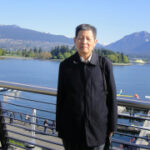
author By Dr. You-Sheng Li
Share