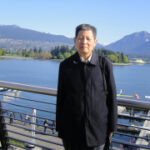
Yue Shixuan (Yusheng) (Rewritten in June 2007)
I believe the best summary of Mao Zedong’s life is what he himself said in his youth: “To struggle with Heaven is endless joy; to struggle with Earth is endless joy; to struggle with Man is endless joy.” These three phrases aptly describe Mao himself and the mainland China under his control from 1949 to 1976, without any exaggeration. Former Soviet leaders and Westerners have complained that Red China is like a belligerent rooster. In reality, this is entirely a reflection of Mao’s personality, representing neither the Chinese people nor all members of the CCP. Mao thoroughly devastated his country and government, leaving no corner untouched. This includes his own family, demonstrating that Mao practiced these three phrases diligently, without any pretense. If we are not misled by superficial rhetoric and embellishment, but analyze them carefully, we will find that behind Mao’s various actions lies a profound Taoist tradition.
Mao was certainly not a sincere and self-aware Taoist thinker, but this does not deny the Taoist elements in his thought, nor does it prevent us from analyzing his life and deeds from the perspective of Taoist thought. Marx once said, “I am not a Marxist.” Marx meant that he himself did not practice Marxism; strictly speaking, this was hypocrisy, but Marx undoubtedly believed in his own doctrines. Mao once said that he believed in Confucius and Mencius in his youth, and later converted to Marxism. However, I believe that Mao’s thought was far removed from both Marx and Confucius/Mencius, and closer to Taoist thought. The tendency towards economic determinism in Marxism has been widely criticized, and this determinism of economics on consciousness disappeared without a trace in Mao’s China. On the contrary, Mao emphasized the role of thought and politics throughout his life, fighting against those with tendencies towards economic determinism. During the Cultural Revolution, almost everyone connected to economic production became a target of Mao’s attacks. Marx said that proletarian revolution would only occur when the whole world had entered a highly developed capitalist society, but Mao labeled the peasant revolution he led as Marxist. If we remove the creative developments by Lenin and Mao Zedong and return to the original form of Marxism, the traditional Chinese consciousness within Mao Zedong Thought will be fully revealed.
The influence of Mao’s Confucianism has been discussed by many scholars. I believe that among Confucianism and Taoism, Mao was closer to Taoism than to Confucianism. In Chinese history, intellectuals, when successful, sought to benefit the world, upholding the teachings of Confucius and Mencius; but when unsuccessful, they cultivated themselves in the fields, using the philosophies of Laozi and Zhuangzi to cultivate their minds and character. Furthermore, because Laozi and Zhuangzi idealized a self-sufficient small-scale peasant economy in rural areas, this perfectly aligned with the rural reality of my country for thousands of years. As a result, the dominant ideology in rural my country was closer to Taoism than to Confucianism, merely using the teachings of Confucius and Mencius to define family ethics. Mao grew up in the countryside, and through his surroundings, he unconsciously absorbed the spirit of Taoism. Historically, figures from rural backgrounds such as Liu Bang and Zhu Yuanzhang also showed clear Taoist tendencies.
If Confucianism had any influence on rural China, it was limited to the intellectual class; ordinary farmers were more inclined towards Buddhism and Taoism. Mao’s family wasn’t exactly an intellectual family. His father was an ordinary farmer who had served in the army and done business. Although he was literate, he strongly opposed Mao pursuing further education and joining the rural intellectual class. Mao’s mother was a Buddhist, and Mao even discussed with her how to persuade his father to become a Buddhist. It is said that after being frightened by a tiger, Mao’s father also became respectful of Buddhism and occasionally burned incense. In rural China, most people didn’t distinguish between Buddhism and Taoism, but few blurred the lines between Confucianism and Taoism, or Confucianism and Buddhism. Buddhism is purely religious and doesn’t interfere in politics, but the influence of Taoism in rural China was different. It included religious philosophy as well as the Taoist political ideal of advocating a egalitarian society. The Gelaohui (a secret society) influenced by Taoism was powerful in Hunan, and in Mao’s hometown, they instigated disturbances and organized raids on wealthy households. Therefore, Mao’s family’s social standing in rural China at that time was influenced by Taoism, and was quite distant from Confucianism. Mao’s family background was the opposite of Zhou Enlai’s; the latter was closer to Confucianism than Taoism. Zhou Enlai’s style was more akin to the Confucian ideal of moderation and elegance, thanks to his excellent early family education. Mao, on the other hand, also studied the Confucian classics and the Four Books in his youth, but that was a distorted version of Confucianism from the transitional era, insufficient to help him transcend the influence of his family.
Many biographies of Mao describe his childhood compassion for the poor, mentioning how he and his mother conspired against his father, secretly giving rice to impoverished villagers, and working with the family laborers to combat his stinginess. These accounts are credible, but it’s important to note that this was a common phenomenon in rural China: fathers who had become wealthy were extremely frugal, leaving only the mothers and children, who were not in charge of the household, room to show compassion. Lao Tzu said, “When Heaven and Earth unite, sweet dew falls; the people are naturally equitable without being commanded.” He also said, “The way of Heaven is to take from those who have more and give to those who have less. The way of man is not so; it takes from those who have less to give to those who have more. Who can have more to give to the world? Only the one who follows the Way.” Lao Tzu’s words mean that Heaven sends down sweet dew, and without anyone’s command, the people will naturally become equitable; the abundant give to the poor—this is a natural rule. The human way, however, is the opposite, giving the insufficient to the rich. In short, according to Taoist thought, egalitarianism is a manifestation of human nature, while managing a household and becoming wealthy is a cultural endowment.
Modern large-scale societies are two-tiered societies, distinct from prehistoric primitive societies. In ancient times, primitive society was the only social stratum above the family, consisting of approximately 150 people. Nomadic groups and tribes constituted primitive societies. Primitive societies were a natural extension of human genetic traits, where these traits were fully expressed. There was no external pressure forcing human nature to change in a particular direction, making them egalitarian and peaceful societies. Human instincts were sufficient to maintain the internal harmony of primitive societies. Psychological and emotional communication existed between people in primitive societies; psychologically and emotionally, primitive societies were a unified whole. Individuals cannot engage in psychological and emotional communication with secondary societies; the integrity of secondary societies relies on shared ideals and organizational structures. The pursuit of wealth and the use of money as a social standard form the foundation of contemporary Western societies. (For further discussion on two-tiered societies, please visit the author’s website: taoism21cen.com)
Chinese Taoist tradition envisions an ideal society as one of equality and equality, a primordial state. In modern civilized society, rural areas are closer to this primordial state than cities. Traditional Chinese discourse often portrays peasants as extreme egalitarians, a concept derived from the Taoist idea of natural egalitarianism, labeled as extreme and unacceptable in modern society. Among the leaders of the CCP Central Committee, Mao Zedong Thought is far closer to the Taoist ideal of an equal society than others, becoming the ideological root of his stubborn implementation of ultra-leftist policies such as the Cultural Revolution, which bypassed the majority of the central leadership.
In short, if we remove the fashionable Marxist-Leninist terms from Mao’s works, we can see that his thought indeed had a considerable foundation in Huang-Lao Daoism. Some scholars believe that all dynasties in Chinese history internally employed Huang-Lao thought while outwardly displaying Confucianism. Similarly, we can say that Mao internally employed Huang-Lao thought while outwardly displaying Marxism-Leninism. Mao led his country into endless chaos, which people jokingly called “malaria.” Just as a person with malaria experiences chills followed by a high fever, but then returns to normal, Mao’s numerous political movements were similar, achieving nothing but internal depletion and stagnation. This aligns with the principle of non-action (wuwei) in the Chinese Daoist tradition, even if this non-action was not voluntary. After Mao’s death, mainland China changed rapidly. In the past two or three decades, there have been significant changes in the economy, art, and ideology, and even the urban and rural landscape of the motherland has undergone rapid transformation. In comparison, Mao’s China was indeed a series of aimless and ineffective upheavals.
Marx viewed capitalism as the final stage of social development, much like a frail old man suffering from cancer, and his prescription was communism. Mao confused this with the peasant dream he cherished in his youth—a simple and egalitarian society. For over a century, the rapidly developing world has made it difficult for China to adapt, repeatedly placing it in a vulnerable and vulnerable position. Astonishingly, Mao, as the leader of the world’s most populous nation, saw no need for reform, instead indulging in this childhood dream. He spent his life waging a fierce struggle against those with even slightly progressive ideas, relentlessly stifling the progressive thoughts of hundreds of millions of Chinese people.
The fact that half of Mao’s bed was covered with ancient books gives a glimpse into his family life. Mao even envied other CCP leaders for having harmonious families, complaining that he was the exception. Mao spent his last birthday with a group of young nurse girlfriends. His wife, Jiang Qing, personally brought him her favorite fish soup, requesting a meeting. Mao instructed the nurses to tell her to leave the soup and not to come in. When I was in university, Mao’s daughter was also studying at Peking University. It’s said that she only saw her father once or twice a year. During the Cultural Revolution, Jiang Qing tearfully complained at a mass rally of ten thousand people at Peking University that class struggle had reached her own home, causing Mao’s daughter-in-law to flee overnight.
According to his personal physician, Li Zhisui, Mao lived a very simple life: he often wore pajamas all day, only dressing up when receiving guests. However, when meeting Khrushchev, he wore only his underwear, citing the swimming pool as the reason, to show his contempt for world hegemony. When Khrushchev wanted to hold joint military exercises with China, Mao, looking displeased, said: “Then you send warships and planes, and we’ll send people.” This remark effectively silenced Khrushchev. It is said that when Mao first received Li Zongren, who had returned from overseas, at Zhongnanhai, he also wore only shorts in the swimming pool. Imagine Mao’s enormous, obese body placed before guests—truly living up to the famous saying, “Revolution is not a dinner party.” Mao never brushed his teeth, only rinsing his mouth with tea, and never bathed, instead using a towel to wipe himself. It is said that Mao did not use soap to wash his face. Mao lived in Zhongnanhai, which was originally a royal garden, and he had his guards grow vegetables next to his residence. On one occasion, he criticized the bourgeois habit of planting flowers and grass, saying that while flowers could be planted in public places, individuals should grow more useful plants such as vegetables and fruit trees in their homes. As a result, thousands of privately owned potted plants were moved out and placed along the roadsides. Decades after Mao’s death, his children, now in their twilight years, were content to live as ordinary citizens. His daughter, Li Na, often told reporters, “I am just an ordinary citizen.” She wore patched clothes, and people followed her, criticizing her, “You are the only person in Beijing wearing such shabby clothes!” This was quite different from the children of later leaders like Deng Xiaoping. It is said that the situation changed somewhat after Hu Jintao came to power. This may be related to the influence of Mao’s rural upbringing and aligns with the Taoist emphasis on simplicity. Ms. Zhang Rong pointed out that Mao had no other extravagant hobbies, but he enjoyed building villas in mountain valleys, and local officials, deliberately currying favor, built many for him throughout the country. This also reflects Mao’s weariness of city life and his inner desire to return to nature.
Land reform, or the policy of redistributing land, was not very successful in other countries; mainland China was almost the only exception. Mao Zedong was the advocate and promoter of this policy. Influenced by Taoist thought, China’s history has repeatedly seen national policies restricting land annexation and even redistributing land. In the new era of the 20th century, Mao was the advocate of this old tradition. Based on the standard that employing two people constituted a landlord, before the land reform, landlords accounted for only 3.79% of all peasant households, and landless hired laborers were a tiny minority. The landlord class had an average of 26.32 mu of land per person, while middle peasants had 3.05 mu per person—the former being only more than five times the latter. This contrasts sharply with the situation in medieval Europe, where lords and serfs dominated and free peasants were extremely rare. European peasants, after going bankrupt, became employed, thus embarking on the path of agricultural commercialization, while Chinese peasants, under Mao’s leadership, still clung to an ever-shrinking piece of land, dreaming of a legacy passed down through generations for thousands of years.
In the first half of the 20th century, China was plagued by frequent wars, which ultimately disrupted the peace of rural areas. The voices of the peasants became the dominant theme in Chinese politics, and Mao Zedong rose to prominence precisely because of this situation. Imagine, everyone holding a gun, yet having no bread to eat—what else could that be but communism? Mao had read Laozi and Zhuangzi in his youth, but his mind was filled with the heroic gatherings of the Three Kingdoms; he rarely quoted Laozi and Zhuangzi. According to psychologists like Freud, the human brain has a conscious and subconscious mind. People often unconsciously suppress inappropriate thoughts, sending them into the subconscious realm. However, this does not prevent the unconscious from exerting a significant influence on behavior. Experiments have shown that when deciding which car to buy, people are given 30 seconds and an hour to choose. In an hour, a person can synthesize available information, consider various advantages and disadvantages, and make a rational judgment; in 30 seconds, they can only rely on feelings and the subconscious. The results show that the choice made in 30 seconds is better. Psychologists therefore say that a large part of our life decisions depends on our subconscious. A person’s subconscious is often related to their childhood experiences. Mao’s childhood mindset was undoubtedly closer to Taoism than Marxism-Leninism. Mao’s self-reliance and the People’s Commune were all reflections of his deep-seated Taoist ideal of a new world, and had nothing to do with Marxism.
In Mao Zedong’s writings, Daoist ideas, figures, classics, and allusions are ubiquitous, but mostly casually cited without deeper meaning. For example, in his “A Study of Physical Education” published in *New Youth* in 1917, Mao quoted Lao Tzu as saying, “Lao Tzu said, ‘Inaction is the greatest virtue.'” However, the entire *Tao Te Ching* does not contain the phrase “Inaction is the greatest virtue,” and Mao, advocating action, used Lao Tzu’s concept of stillness as a foil. Similarly, in “Farewell, Stuart,” Mao wrote, “Lao Tzu said, ‘The people do not fear death, so why threaten them with death?'” Mao made this statement in 1949, after millions had lost their lives to achieve victory, intending to demonstrate that the Chinese people were not afraid of death. In reality, Lao Tzu was a rare pacifist who advocated celebrating victory with funerals, far removed from Mao’s original meaning. It was only in his December 1958 comments on *The Biography of Zhang Lu* that Mao’s utopian Daoist thought was revealed deep within his mind. The following is an excerpt from the official document, which shows that Mao himself had abandoned Marxism-Leninism and linked himself with peasant uprisings throughout history:
The mass medical movement described in the *Records of the Three Kingdoms* by Chen Shou (Biography of Zhang Lu) is somewhat similar to the free medical care in our People’s Communes… Eating at roadside restaurants was free, which was the most interesting aspect and pioneered the public canteens of our People’s Communes. For about 1600 years, the production, consumption, and sentiments of poor and lower-middle peasants have remained largely the same—they were all extremely poor… One common thread is that the vast majority of the extremely impoverished peasantry dreamed of equality, freedom, escaping poverty, and achieving a life of plenty… However, the unconscious presence of primitive socialist characteristics is undeniable, especially among the poorest masses, rather than their leaders (Zhang Jiao, Zhang Lu, Huang Chao, Fang La, Liu Futong, Han Lin’er, Li Zicheng, Zhu Yuanzhang, Hong Xiuquan, etc.). The current People’s Commune movement has historical roots in our country…”
Of the Hundred Schools of Thought in China, only Laozi and Zhuangzi disregarded all authority, acting independently. Zhuangzi is renowned for his bold statement, “Born with Heaven and Earth, one with all things.” In today’s terms, this means, “I am God’s brother, I am one body with the universe.” Many modern scholars consider Zhuangzi a representative figure of the Chinese recluse school. Recluses’ imaginations are boundless, affecting only themselves. When Mao met with former American journalist Edgar Snow, he used a popular proverb among northern farmers, saying, “I am a monk holding an umbrella.” When this was translated and appeared in Western newspapers, it was interpreted as a picture of Mao, old and lonely, holding an umbrella in the wilderness during a rainy day. Mao’s meaning, however, was, “I, Mao, face life and the world with utter disregard for the law.” But Mao was, in reality, a living God in mainland China, the tragic end of which is well known.
Mao rebelled against his father from a young age. He became a major leader of the CCP in 1935 entirely due to his anti-Comintern stance and his adeptness at exploiting the Comintern’s leadership failures. During the Chinese Civil War, Mao rejected Stalin’s peace proposals. After Stalin’s death, Mao quickly broke with the Soviet Communist Party and openly criticized the Soviet Union. Ignoring strong internal opposition, Mao single-handedly promoted agricultural collectivization, leading to the infamous Great Leap Forward, which caused widespread famine. Amidst widespread complaints, Mao, well-versed in the Huang-Lao philosophy of “keeping a low profile,” targeted his own political allies, ousting his fellow Hunanese Peng Dehuai to quell discontent and allow the opposing side to take power, while he retreated to the sidelines to observe the changing situation. Several years later, Mao launched the Cultural Revolution, targeting all cadres. What greatly displeased Mao was that revolutionary cadres, upon entering government offices, immediately became bureaucrats, requiring another revolution to overthrow them. The result was Mao’s theory of continuous revolution, but no matter how many revolutions occurred or how many people were overthrown, Mao himself was the sole exception; no revolution could touch him.
In modern society, we all simultaneously assume multiple roles. In the family, we are husbands and wives, parents and children. In factories or government offices, we are employees and public officials. In cities, we are citizens and residents. Society organizes all people into a network through these various roles. Mao Zedong, during the Cultural Revolution, famously said, “When the key link is grasped, everything else falls into place.” In Mao’s eyes, the social network of hundreds of millions of people had a key link in his hand; with a pull, everyone was affected. This is, of course, an oversimplified diagram of the social mechanism, but it reflects the essence of interpersonal relationships in a two-tiered society. People say that Western social networks are money-based, while Chinese social networks are official-based, meaning Mao used the promotion of official rank as the unit of measurement in society. The privileges and hierarchical distinctions of official positions needed to be vast, intricate, and highly developed to achieve the effect of Mao’s grasp of the key link affecting hundreds of millions of people. This in itself contradicted Mao’s dream of a equitable society. In the end, Mao launched the Four Cleanups Movement and the Cultural Revolution to destroy the newly established bureaucratic system, making the difference in official rank insufficient to influence bureaucrats, let alone ordinary people. Therefore, physical punishment, wrongful deaths in prison, and large-scale terror were inevitable.
Accurate chronology of Chinese history begins with the peasant uprisings during the reign of King Li of Zhou. Since then, the frequency and scale of peasant uprisings in China have been unparalleled in the world. The Han and Ming dynasties were products of these uprisings, both of which directly led to massive shifts in the social hierarchy, akin to the flipping of a pancake. This is unprecedented in the West. In modern Chinese history, the Kuomintang overthrew the Qing Dynasty through revolution, but before it could consolidate its power, the Communist Party successfully overthrew the Kuomintang. Mao Zedong, after only ten years in power, sensed something was amiss and began to target internal factions in various ways. During the Cultural Revolution, power organizations such as the Shanghai Commune were established in response to the short-lived Paris Commune of 1789, dividing society into two factions engaged in a life-or-death struggle. Zhou Enlai, born into a bureaucratic family and having experienced much hardship, was familiar with this historical phenomenon in China. He described the struggle between the two factions as a “pancake flipping”—one faction in power leaving the other in the dust, imprisoning or confining them. Once the other faction emerges from prison and seizes power, they begin to exploit the previous faction’s power. This flipping-the-pan revolution ultimately aims for the ideal of a equitable society, as envisioned by Taoism, but can only approach it, never truly achieve it. Mao’s various misguided actions are merely a dramatic microcosm of this historical process.
In my book, *A New Interpretation of Chinese Taoism*, I compared post-Renaissance Europe with China’s Spring and Autumn and Warring States periods, discovering striking similarities: both began as feudal societies and developed into unified prefecture-county systems. The differences lie in the fact that Qin successfully unified China, while the two World Wars, attempts to unify Europe by force, ended in failure. The French Revolution spurred comprehensive social reforms in Europe, while China separated social reform from peasant revolutions: the reforms led by Li Li and Shang Yang, and the uprisings of Chen Sheng and Liu Bang over a century later. The peasant uprisings during the reign of King Li of Zhou were primarily about seizing financial power from the ruling class, lacking concrete plans for social reform; subsequent peasant uprisings followed a similar pattern. Since Chinese revolutionary uprisings did not include social reform, they were merely dynastic changes, stagnant progress, and generations of bloody struggle aimed at an unattainable Taoist ideal of a egalitarian society. This may sound ridiculous, but the world is still engaged in this struggle today. Various social movements, such as poverty alleviation and curbing the accumulation of wealth, all use the ideal of an equal society as a weapon to combat social inequality, only without bloodshed.
Before the agricultural collectivization movement of the 1950s, farmers in northern China called themselves “Kings of Freedom,” meaning they lived leisurely and contentedly in their own land, like kings. Except during periods of war, drought, or flood, rural life was relatively stable, largely as Lao Tzu described: “They find joy in their food, beauty in their clothing, peace in their dwellings, and delight in their customs,” leading a simple yet joyful life. They had plenty of leisure time, at least half the winter months were uneventful, and they devoted their free time to spiritual pursuits, including religious pilgrimages. The sheer number of festivals, the grandeur of weddings and funerals, and the frequency and scale of various recreational activities often meant that farm work was frequently neglected as everyone mobilized. Such a lifestyle would surely evoke envy in today’s urban office workers. Compared to modern life, their lives were closer to the primitive social life of prehistoric times.
To organize the farmers’ leisure time and promote it to a higher level, whether in the economy or the arts, requires a two-tiered social structure—a unified system of ideas and values—and the establishment of a corresponding hierarchical system. Without this two-tiered social structure, farmers can only spend their leisure time in traditional ways. A hierarchical system implies a powerful middle class. In Chinese history, the imperial system, influenced by Daoist thought, swept away the middle class, leaving farmers living directly under the emperor’s authority. Scholars generally believe that the decline of the middle class occurred in the Song Dynasty. Intellectuals had little space to realize their ambitions in a two-tiered society, returning to Confucius’s saying, “Ancient scholars sought self-improvement,” turning inward to seek solutions, thus giving rise to the Neo-Confucian movement in the Song and Ming Dynasties. Mao Zedong said, “To struggle with Heaven is endless joy; to struggle with Earth is endless joy; to struggle with Man is endless joy.” While this sounds ambitious, it didn’t break through the ideological circle he had as a rural youth. It became the last battle in history to sweep away the middle class, the result of which was like trying to ascend to heaven with one’s own pigtail—exerting effort on the same level.
In the Chinese Taoist tradition, there is no concept of democracy. Taoism advocates equality, frugality, compassion, and non-competition, which may possess a social function similar to democracy, giving people a sense of fairness. Early Taoist thinkers often used water to illustrate Taoist principles, which some Western scholars call flowing water thinking, characterized by its tendency to flow downwards and indirect approaches. This simple Taoist thought, in the hands of some Huang-Lao schools, became court politics, the so-called “the sound of the axe and the shadow of the candle, a mystery for all time.” Furthermore, Taoism’s atheism, which scorns all authority, became, in their hands, a cold and ruthless iron-fisted politics. Mao Zedong displayed these characteristics from the very beginning of his political career.
When Mao joined the Chinese Communist Party, it was around the time of the May Fourth Movement. Influenced by the West, people were talking about freedom, democracy, and social reform. The CCP also had its own set of election principles to determine its leaders. Mao, wielding immense power, set aside those principles and focused solely on building his personal power network. Regardless of right or wrong, he remained firmly in power, and no one dared to object. Before him, the CCP leadership changed every few years, but Mao’s rule was unshakeable, lasting for forty-one years until his death without designating a clear successor. In the decade or so before his death, Mao’s old-fashioned, monarchical tactics were fully exposed: he played a game of hide-and-seek with his high-ranking officials, keeping his true intentions a secret. At the 1959 Lushan Conference, everyone agreed that Mao wanted to correct the excessive leftist tendencies, but Mao, ashamed that his intentions were known to all, made a complete 180-degree turn, ending the conference with an anti-rightist opportunism campaign. During the Cultural Revolution in 1967 and 1968, everyone thought Mao wanted to oust Xie Fuzhi, the then Minister of Public Security. Mao, contrary to his usual practice, purged Xie’s opponents, including Yang Chengwu. This left those around him bewildered and suspicious. In his later years, Mao relied heavily on his bodyguards, dance partners, and a few relatives such as Mao Yuanxin and Wang Hairong for information, which became what the West satirized as the Communist Party’s court politics. This also reflects that Mao’s interactions with others were confined to the circle of face-to-face interactions with relatives and friends, and he was accustomed to acting as a patriarch; he lacked the idea of equal interaction with independent individuals in a secondary society, which led to China’s diplomatic isolation for a period of time.
Zhuangzi was one of Mao’s favorite books, and Li Bai, a poet with Daoist leanings, was one of Mao’s favorites. The unrestrained and expansive style of Zhuangzi’s writing also reflected Mao’s speaking style; Li Bai’s romanticism and boldness were also evident in Mao’s poetry. Like Emperor Xuanzong of Tang and Emperor Huizong of Song, both renowned Daoist emperors with artistic temperaments, the romantic poet Mao leaned towards Daoism but was far removed from Confucianism. Mao, of course, selectively embraced Daoism, not accepting it entirely. Laozi proposed the Three Treasures of frugality, compassion, and not striving to be first in the world; Mao only managed to achieve frugality, while the other two were the exact opposite: ruthlessness and a desire for domestic and international dominance.
Yin and Yang, opposing yet complementary, constantly transforming into one another, the so-called “softness overcomes strength,” is an important component of Taoist theory. Mao used it to explain the revolutionary principle of making the lowly intelligent and the noble foolish, namely, the theory of continuous revolution by which the oppressed people overthrow the ruling class. Also known as the two-point theory, dichotomy, dialectics, etc., this Taoist theory became Mao’s mantra, permeating all his writings and speeches. This theory of Yin and Yang transformation naturally also applied to Mao himself: such a multifaceted and complex life, such a powerful and influential figure, lying in his bedroom in Zhongnanhai in his later years, watching the impatient expressions of those around him awaiting his death day after day, at the end of his rope, only helplessness remained. A poem Mao wrote more than a decade ago, “Nian Nu Jiao: Birds’ Dialogue,” ends with the line, “No need to fart, please fill my empty belly.” Before his death, Mao changed it to “Let’s see the world turn upside down.” Imagine, Mao didn’t believe in gods or ghosts; how could he have the blessing of witnessing the world turn upside down after his death? Moreover, Mao’s death was something everyone had long awaited, so how could it cause such a huge uproar? Therefore, it was better to be practical. Mao launched the campaign to criticize Deng Xiaoping to eliminate factors that could cause political turmoil after his death. However, even Mao himself felt powerless in the criticism. So, in a long speech criticizing Deng, when mentioning his wife Jiang Qing and her leftist friends after his death, Mao blurted out that he was begging Deng Xiaoping and others to show leniency. But they didn’t show leniency. More than ten years after Mao’s death, Jiang Qing hanged herself in prison. Even Western newspapers reported that writers persecuted by Jiang Qing celebrated her death at home. Even if Mao’s spirit were watching from heaven, he could only lament, “His campaign was cut short, leaving heroes to weep in sorrow.”
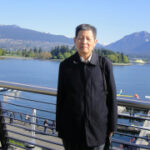
author By Dr. You-Sheng Li
Share